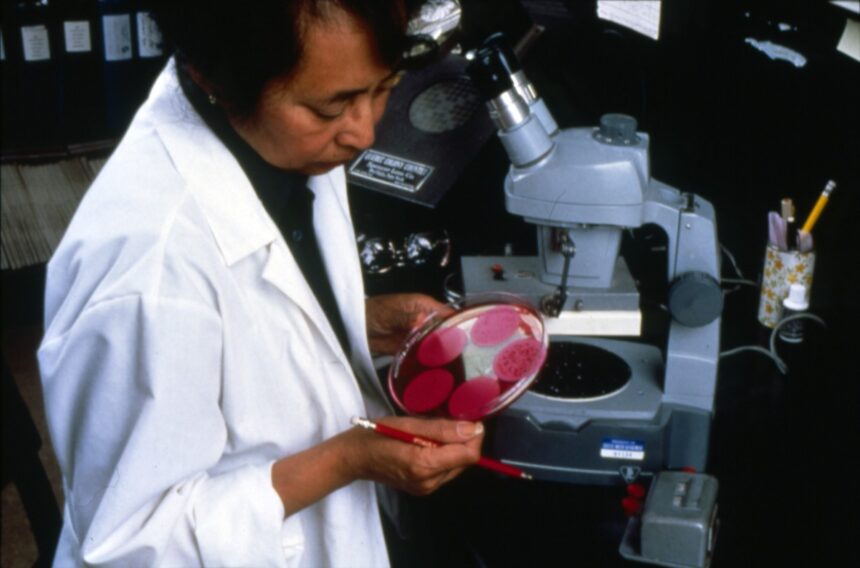
For most of medical history, the default human in the laboratory was male: male animals, male cell lines, male trial participants, with women’s biology treated as a complicating variable to be excluded rather than a subject to be understood. The consequences are written in the data — conditions that primarily affect women take years longer to diagnose, drug dosing was calibrated on male metabolism, and entire fields, from endometriosis to menopause, remain scientifically underexplored relative to the suffering they cause.
The correction is now arriving from several directions at once. In the United States, a presidential order has directed new funding and coordination toward women’s health research, championed publicly by the First Lady, while major philanthropies have committed billions to the field. Venture capital, having discovered that half the population constitutes a market, is funding women’s health startups at unprecedented rates. Our health desk has covered the gap for years; the new money is the story our readers kept asking about.
What a Funding Gap Actually Looks Like
The statistics are stark. Analyses of research budgets find that conditions burdening women receive funding far out of proportion — in the wrong direction — compared with diseases of similar prevalence and severity. Endometriosis, which affects roughly one in ten women and can take the better part of a decade to diagnose, has historically drawn a sliver of the research devoted to conditions with smaller footprints. The National Institutes of Health now runs dedicated offices and reporting requirements to correct the imbalance, and clinical trials are required to include women and to analyse results by sex — rules that exist precisely because the market and the culture did not deliver them unaided.
The science awaiting funding is not marginal. Cardiovascular disease presents and progresses differently in women and remains their leading killer, frequently misdiagnosed. Autoimmune diseases strike women at multiples of male rates for reasons still poorly understood. Pregnancy — a physiological stress test that predicts later health — remains astonishingly under-studied relative to its universality.
Money Is the Start, Not the Finish
Researchers caution that funding surges must survive administration changes and fashion cycles to matter; laboratories, cohorts and careers are built on decade timescales. There is also a pipeline problem: a field starved for fifty years lacks the senior scientists to absorb sudden billions wisely, making training and infrastructure as important as grants.
The Commercial World Noticed the Same Gap
It is not only governments writing cheques. Femtech — the sector of startups building products for women’s health, from cycle analytics to menopause platforms to pelvic-health devices — has grown from a punchline at venture conferences into a portfolio category, precisely because the incumbents left the field empty. Acquirers from the large medical-device and pharmaceutical firms have begun buying what they failed to build. The pattern is the market’s version of the scientific story: an underserved half of humanity is not a niche, and the money that finally noticed is behaving accordingly.
Sceptics within the research community add a useful caution: commercial enthusiasm clusters where products are sellable — apps, supplements, diagnostics for the worried well — while the deepest deficits are in unglamorous basic science and in conditions affecting women without purchasing power. A funding renaissance is measured by what it fixes, not by what it funds. On that test, the next decade’s grant lists will tell the truth.
Funders describe the change in similar terms: less a sudden enlightenment than a correction, as review panels, journal policies and trial registries each tighten the expectation that sex be treated as a variable rather than an afterthought.
Still, something real has shifted. Women’s health has moved from charity-case framing to the centre of research policy and investor decks simultaneously — a combination that historically precedes genuine progress. The questions have been waiting for decades. Now, at last, they are being resourced. More at thegeissblog.com.