Continuous glucose monitors have transformed care for people who rely on insulin. Now the largest clinical trial of its kind suggests the small wearable sensors may also deliver major benefits for adults with type 2 diabetes who do not use insulin at all. Published in the New England Journal of Medicine, the study found that participants wearing a continuous glucose monitor (CGM) spent approximately five more hours a day in their target blood sugar range than those relying on standard care.
What the Trial Found
Researchers followed adults with type 2 diabetes who were not on insulin and compared CGM use with conventional blood sugar management. The difference was substantial: roughly five additional hours per day spent in the healthy target range is the kind of improvement clinicians usually associate with medication changes, not with a monitoring device alone. According to the University of Colorado Anschutz summary of the research, the results represent the strongest evidence yet that CGMs help this much larger, often overlooked patient group.
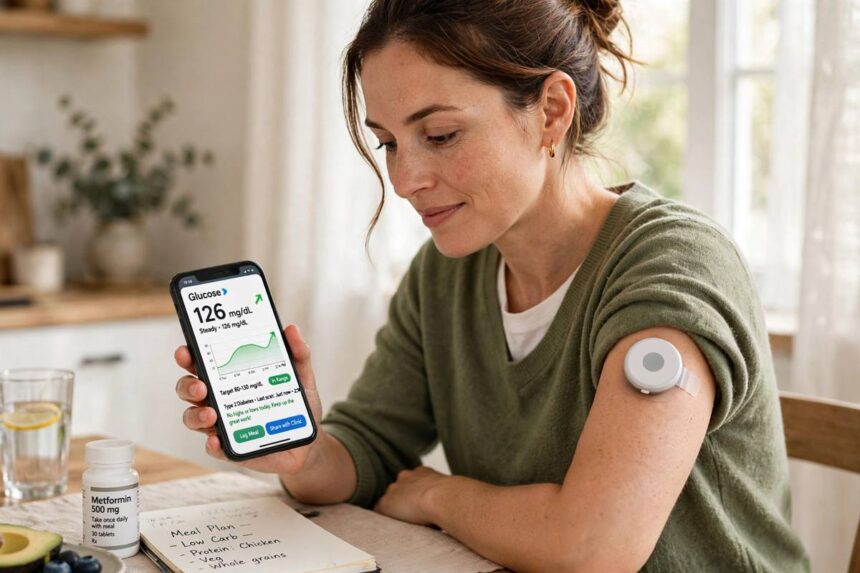
The logic behind the benefit is behavioural as much as medical. A finger-prick test gives a single snapshot a few times a day. A CGM shows a live, continuous curve — what a meal, a walk, stress or poor sleep does to blood sugar in real time. That feedback loop helps wearers learn, within days, which foods spike their glucose and which habits bring it down.
Why Five Hours Matters
Time in range has become one of the most meaningful measures in diabetes care because it captures the hours that blood tests every few months cannot. Spending more of the day in the target range means fewer damaging highs and lows, steadier energy, and, over time, a lower risk of the complications that make diabetes so serious — including damage to the eyes, kidneys, nerves and cardiovascular system.
An extra five hours a day compounds quickly. Across a year, it amounts to more than 1,800 additional hours in the healthy range — time during which the body is under measurably less metabolic stress.
The findings also fit a broader pattern in preventive health: small, consistent feedback-driven habits tend to outperform occasional drastic changes. We explored a related idea in our article on slow living and the psychology of doing less, where steady routines, not intensity, drove the benefits.
A Much Bigger Patient Group
The vast majority of people with type 2 diabetes do not use insulin, and historically they have rarely been offered CGMs, which insurers have typically reserved for insulin users. A trial of this scale, published in one of medicine’s most influential journals, strengthens the case for widening access considerably. If coverage follows the evidence, millions more patients could be offered a sensor that sits on the arm and transmits readings to a phone every few minutes.
There are practical questions still to answer. Sensors cost money, supplies must be replaced every one to two weeks, and patients need support to interpret the flood of data without becoming anxious about every fluctuation. The trial’s results suggest those challenges are worth solving — but they also underline that a device works best alongside, not instead of, good clinical guidance.
What Patients Should Take Away
If you have type 2 diabetes and do not use insulin, this study is a good reason to raise CGMs with your doctor at your next appointment. Even a short trial period with a sensor can reveal patterns — the breakfast that secretly spikes you, the evening walk that reliably flattens the curve — that years of occasional finger-pricks might never show.
It is equally important to keep the finding in perspective. A monitor does not treat diabetes by itself; it informs the choices that do. Diet, activity, sleep and prescribed medication remain the levers — the CGM simply shows, hour by hour, whether pulling them is working.
The Bottom Line
By giving adults with type 2 diabetes five more hours a day in their target range, continuous glucose monitors have made their strongest case yet for a place in mainstream diabetes care. For a condition managed in thousands of small daily decisions, seeing the effect of each decision in real time may be the most powerful medicine of all.